Older adults can receive a full dry-eye evaluation and treatment plan in Lower Parel, and age alone does not rule out prescription drops, eyelid treatment or other specialist care. By the end, you will know what an assessment checks, which medicines and eye conditions affect the plan, how to use treatments safely, and when to seek prompt care.
Key takeaways
- Age alone does not prevent dry eye treatment.
- Assessment includes medicines, eyelids, tears, vision and eye health.
- Start with causes, lubricants and lifestyle changes before advanced treatments.
- Report sudden pain, vision loss, redness or light sensitivity urgently.
Does age limit dry eye treatment for older adults?
Age does not automatically limit dry eye treatment, so an older adult can receive evaluation and care at a specialist ophthalmology clinic in Lower Parel.
Dry eye in older adults in Mumbai requires more than assuming age is the only cause: reduced tear production can occur alongside faster evaporation from blocked meibomian glands, eyelid abnormalities or reduced corneal sensation.
| Cause or aggravating factor | What changes | Practical implication |
|---|---|---|
| Age-related tear reduction | Less watery tear volume | Lubricating drops may help, but confirm the cause |
| Meibomian-gland dysfunction | Oil deficiency lets tears evaporate faster | Warm compresses and eyelid care apply when examination supports this |
| Eyelid abnormalities | Poor blinking or incomplete closure exposes the surface | Eyelid treatment may be needed alongside drops |
| Reduced corneal sensation | Symptoms can appear milder than the surface damage | Do not judge severity by discomfort alone |
| Mumbai heat, air-conditioning and particulate pollution | Increase evaporation or irritation | They can aggravate symptoms but do not prove dry eye |
Treatment can begin with lubricating drops, warm compresses or other measures selected after examination. Persistent inflammation may require prescription anti-inflammatory treatment or another specialist-directed option; age alone is not a reason to withhold it. Use a comfortably warm, not hot, compress, especially if sensation or hand control is reduced.
A cornea or ocular-surface assessment is more useful than treating every irritated eye as an inevitable effect of ageing.
What happens during a senior dry eye assessment?
A specialist begins with your symptoms: burning, grittiness, watering, blurred vision, light sensitivity, and whether they occur all day or during reading, screen use, driving, or air-conditioning. They also record when symptoms started, whether they are worsening, and whether one eye is affected more than the other.
A complete medication review matters because antihistamines, diuretics, beta-blockers, and some antidepressants can worsen dryness. Do not stop a prescribed medicine; ask the prescribing doctor whether an alternative or dose review is appropriate.
The history should include:
- Cataract surgery, including the date and postoperative discomfort
- Glaucoma treatment, such as drops, laser, or surgery
- Diabetes and retinal disease
- Eyelid drooping, turning inward or outward, incomplete closure, or frequent blinking
- Previous eye procedures, injuries, infections, or contact-lens use
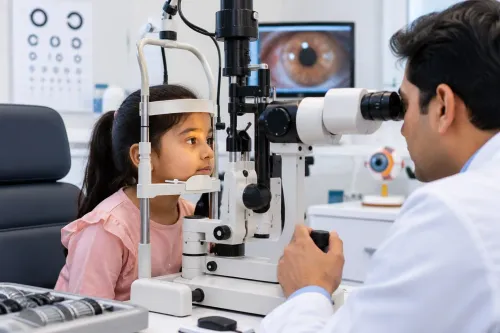
The examination combines symptoms with objective signs rather than relying on one test.
| Test | What the specialist checks | Why it matters |
|---|---|---|
| Slit-lamp examination | Cornea, conjunctiva, eyelids, and tear film | Detects surface damage and inflammation |
| Tear-breakup time | How quickly the tear film breaks after a blink | Identifies unstable tears and evaporation |
| Corneal and conjunctival staining | Dye patterns on the eye surface | Shows areas of injury |
| Tear-meniscus assessment | The tear strip along the lower eyelid | Estimates available tears |
| Schirmer testing | Tear production using a calibrated paper strip | Measures aqueous tear output |
| Eyelid-margin and meibomian-gland inspection | Blocked glands, inflammation, and abnormal oil secretion | Finds evaporative dry eye causes |
These findings guide senior dry eye treatment.
What does a safe treatment ladder look like?
A safe senior dry eye treatment ladder starts with preservative-free artificial tears and steps up only when symptoms, examination findings or inflammation require more. The aim is to treat the cause, not keep adding products blindly.
| Option | What it does | When it applies |
|---|---|---|
| Preservative-free tears | Replaces the watery layer | First step, especially with frequent dosing or surface disease |
| Gel or ointment | Lasts longer than liquid drops | Night-time dryness; ointment can blur daytime vision |
| Warm compress and lid hygiene | Loosens blocked oils and cleans lid margins | Evaporative dry eye or meibomian-gland dysfunction |
| Prescription anti-inflammatory treatment | Reduces surface inflammation | Persistent disease under ophthalmic supervision |
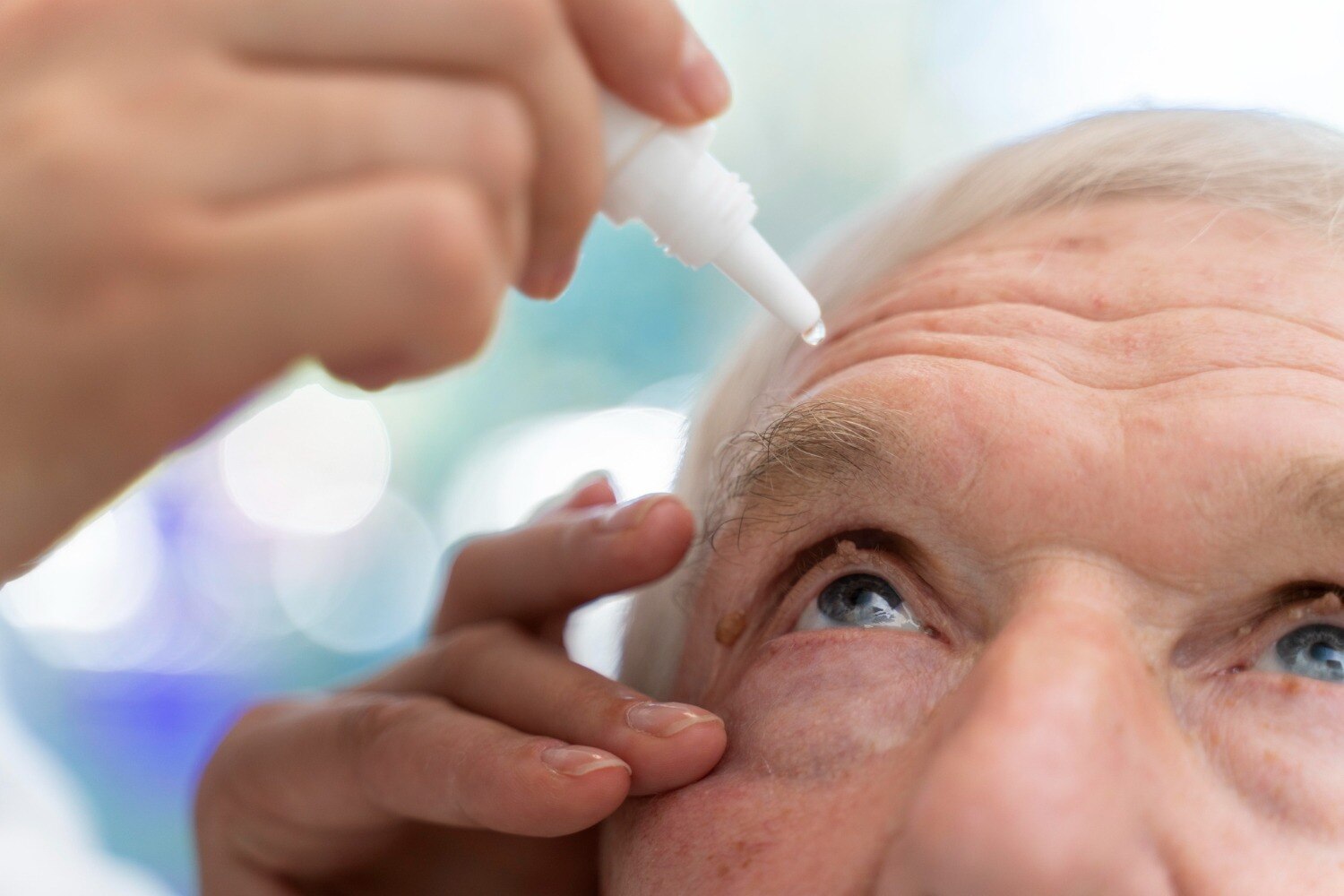
Choose preservative-free tears when you need drops several times daily; repeated preservative exposure can irritate the surface. Wash your hands, look upward, pull down the lower lid, and let one drop fall without touching the bottle tip to your eye, lashes or skin. Close the eye gently rather than squeezing it shut.
Avoid these common mistakes:
- Do not use a compress that feels hot, particularly if sensation is reduced; comfortably warm treatment is safer.
- Do not share bottles, even with family members.
- Do not rely on redness-relief drops as dry eye treatment.
- Do not use preserved drops frequently without reviewing the plan.
- Do not start steroid drops without an ophthalmologist’s instructions. Corticosteroids require monitoring because they can raise eye pressure, accelerate cataract formation and increase infection risk.
Persistent symptoms need a review rather than repeated self-treatment.
How do surgery, chronic eye disease and warning signs change the plan?
Dry-eye care must be coordinated with other eye treatment when surgery, chronic disease or unusual symptoms are present. Before and after cataract surgery, glaucoma treatment or an eyelid procedure, an ophthalmologist may assess the ocular surface and treat inflammation, staining or eyelid-gland disease.
Untreated surface disease can cause postoperative discomfort and fluctuating vision, making the surgical result feel less clear.
| Situation | How the plan changes | What can go wrong |
|---|---|---|
| Cataract surgery | Check and stabilise the tear film before surgery; reassess afterward | Persistent irritation and fluctuating vision can obscure visual recovery |
| Glaucoma treatment | Review drops, preservatives, eye pressure and surface damage together | Switching or adding drops without supervision can worsen dryness or pressure control |
| Eyelid procedure | Examine eyelid closure, position and meibomian glands before and after treatment | Poor closure or altered drainage can increase exposure, watering or irritation |
Punctal plugs are an option only after inflammation and eyelid disease have been assessed and treated or addressed. Blocking drainage can worsen watering or retain inflammatory material.
Seek prompt ophthalmic assessment rather than relying on over-the-counter lubricants for:
- Persistent one-sided redness
- Marked pain or light sensitivity
- Discharge
- Sudden vision loss
- A visible corneal spot
These signs can indicate infection, corneal disease, uveitis or glaucoma. This is especially important in dry eye in older adults in Mumbai, where another eye condition must not be mistaken for ordinary dryness.
How can you choose dry eye care for elderly patients in Lower Parel?
Choosing dry eye treatment for older adults in Lower Parel starts with the clinic’s assessment, not its location alone. Ask for a cornea or ocular-surface consultation with slit-lamp examination, corneal and conjunctival staining, tear-film testing, tear-meniscus assessment and meibomian-gland evaluation. A spectacle check cannot identify every cause of dryness.
| Clinic feature | Confirm | Why it matters |
|---|---|---|
| Ocular-surface examination | Slit-lamp inspection and staining | Reveals surface damage that symptoms alone cannot show |
| Tear testing | Tear-breakup time, tear-meniscus assessment or Schirmer testing | Separates tear instability from reduced tear production |
| Eyelid assessment | Meibomian glands and eyelid margins | Finds gland blockage or eyelid disease driving evaporation |
Make dry eye care for elderly in Lower Parel workable at home by addressing the person’s routine, not just prescribing a bottle:
- For weak hand strength, ask about an administration aid or a caregiver who can give the drops.
- For poor vision, request a drop-instillation demonstration and a method for identifying each bottle.
- For memory problems, use a simplified schedule linked to meals or bedtime.
- For multiple caregivers, write one shared schedule so doses are not missed or repeated.
Treatment failure can result from incorrect administration rather than an ineffective medicine. Clarity Eye Clinic-Dr.Nikita Mashru in Lower Parel is a specialist option to contact and assess against these examination and home-support needs; confirm the service details before booking.
Related service
DRY EYES TREATMENT Dry Eye Treatment by Dr. Nikita Mashru Dry Eye Treatment at Clarity Eye Clinic, Lodha Signet, Lower Parel, Mumbai, focuses on identifying the... View service → |
Frequently asked questions
Does age limit dry eye treatment for older adults?
No. Age alone does not prevent treatment, but medicines, chronic conditions, previous surgery and overall eye health influence the plan.
What happens during a senior dry eye assessment?
An ophthalmologist reviews symptoms, medicines and medical history, then examines the eyelids, tear film, cornea and other eye structures.
What does a safe treatment ladder look like?
Care usually starts by addressing causes and triggers, improving eyelid and environmental care, and using prescribed lubricating drops before adding other treatments.
How do surgery, chronic eye disease and warning signs change the plan?
Previous eye surgery and conditions such as glaucoma, diabetes or blepharitis require an individualized plan. Sudden pain, vision loss, marked redness or light sensitivity needs prompt assessment.
How can you choose dry eye care for elderly patients in Lower Parel?
Choose an ophthalmology clinic that reviews medicines and medical history, examines the full eye, explains treatment options and provides follow-up for changing symptoms.
Keywords