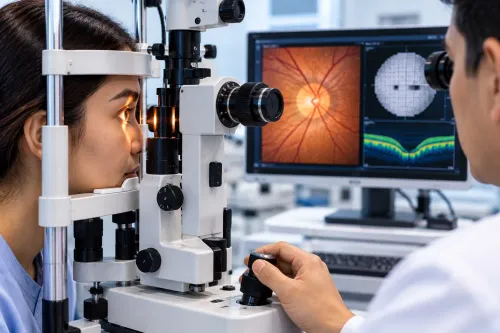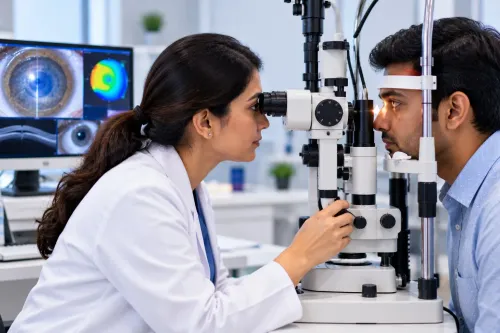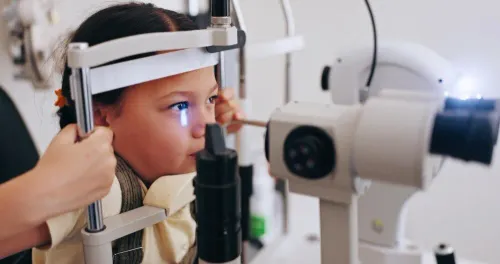
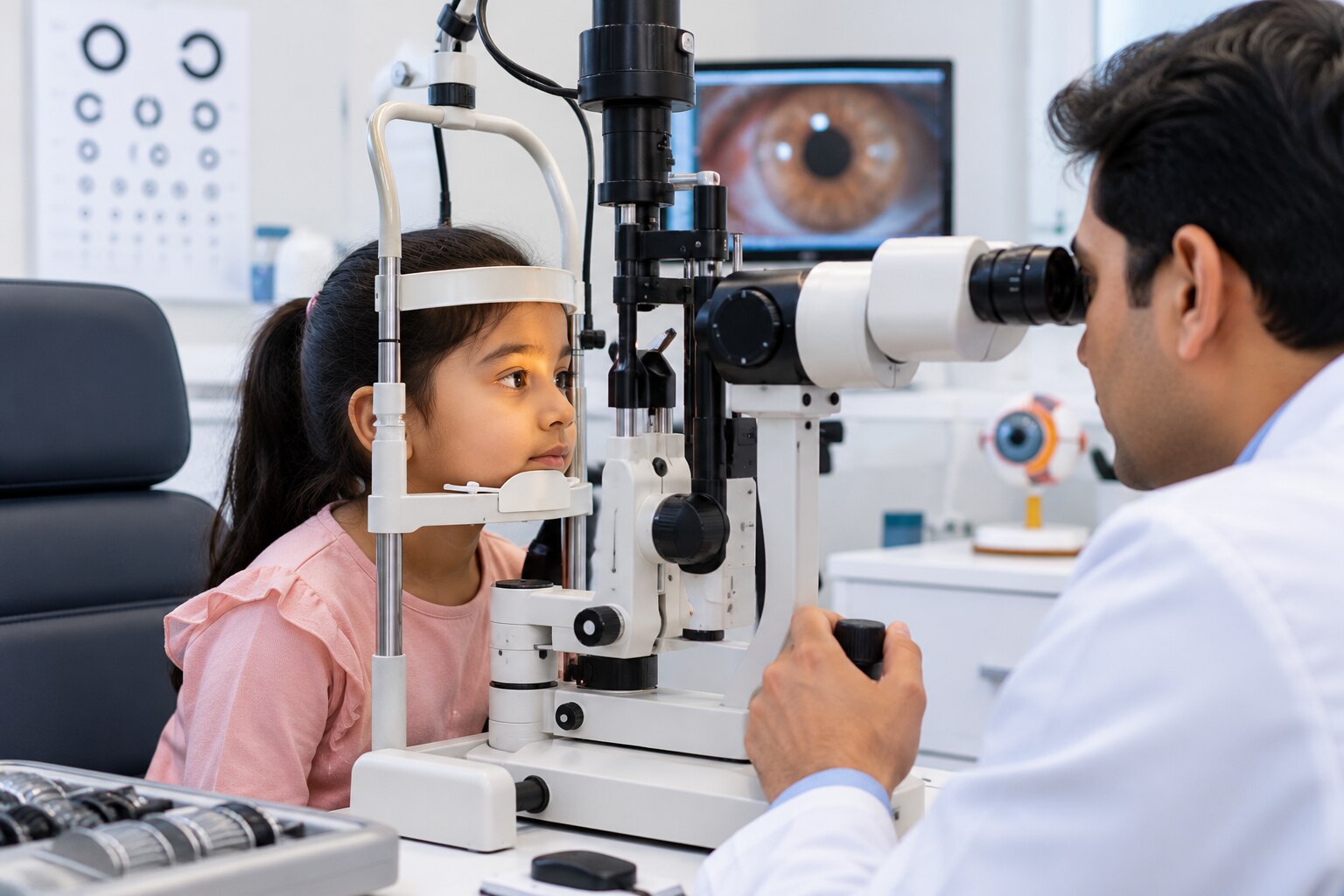
A private child eye examination in Lower Parel may cost about ₹800–₹2,500 for a consultation and basic assessment, while dilation and cycloplegic refraction can bring the bill to roughly ₹1,500–₹4,000. The final amount depends on the child’s age, the tests required, and whether follow-up, imaging, or treatment is billed separately; you can use the breakdown below to request an itemised estimate before booking.
Key takeaways
- Budget ₹800–₹2,500 for a basic private pediatric eye consultation.
- Expect ₹1,500–₹4,000 when cycloplegic refraction and dilating drops are included.
- Ask whether the fee covers refraction, dilation, reports, and follow-up advice.
- Choose a complete examination when symptoms, abnormal screening, or vision concerns exist.
What should you budget for a child eye examination in Lower Parel?
Budget ₹800–₹2,500 for a private pediatric ophthalmology consultation with a basic examination in Lower Parel. A visit that includes dilating drops and cycloplegic refraction commonly costs ₹1,500–₹4,000. These are indicative private-sector ranges, not regulated tariffs; premium hospitals and senior specialists may charge more.
If your search was “pediatric eye for examination cost in lower parel,” compare what each quote actually covers. Two clinics may charge different amounts because of:
- The doctor’s experience, specialty, and consultation length
- Visual-acuity testing, alignment checks, eye-pressure measurement, and refraction
- Dilating or cycloplegic drops, which can require waiting and a second assessment
- A dilated fundus examination, retinal photographs, optical coherence tomography, or other imaging
Ask whether children under five are accepted before booking, since toddlers may need age-appropriate assessment rather than a standard letter chart.
The quoted fee is not the full cost of care. Spectacles, patching supplies, atropine or other medicines, imaging, and follow-up visits can be billed separately; surgery adds hospital, anaesthesia, investigation, surgeon, and postoperative-review charges. Confirm the inclusions in writing, including whether a failed or incomplete examination requires another paid visit.
What does the quoted consultation fee include?
The quoted fee usually covers the ophthalmologist’s consultation and a basic assessment, but not every part of a child eye checkup in lower parel. Ask for an itemised estimate before assuming the advertised amount is the final bill.
| Charge or service | What the fee may cover | What to confirm separately |
|---|---|---|
| Consultation | Medical history, symptoms, family history, and clinical advice | Whether a review visit has a separate fee |
| Vision testing | Visual-acuity testing for each eye, using age-appropriate pictures, symbols, or letters | Whether testing is included for children who cannot read |
| Refraction | Checking for short-sightedness, long-sightedness, or astigmatism | Whether cycloplegic drops and the post-drop refraction cost extra |
| Eye examination | Alignment, eye movements, pupils, red reflex, front of the eye, optic nerve, and retina | Whether dilation drops, fundus examination, or eye-pressure measurement are billed separately |
| Imaging | Only when the doctor needs photographs, scans, or another investigation | The exact test, fee, and reason it is needed |
| Treatment | Usually not included in the consultation price | Spectacles, patching supplies, atropine or other medicines, and surgery |
Ask whether children under five are accepted, because cooperation and testing methods differ by age. Standard health insurance often excludes outpatient consultations and refraction; surgery may require network approval, policy checks, and pre-authorisation. Get written confirmation before scheduling an operation.
Does your child need screening or a complete pediatric eye examination?
A screening pass is not a diagnosis. Routine age-based screening can identify a child at risk, while a complete examination determines why vision is reduced and whether treatment is needed.
A child does not need to know the alphabet. During infancy, clinicians assess fixation, eye alignment, the red reflex, and pupil responses; toddlers may use preferential-looking cards, picture symbols, or instrument-based screening.
Preschool and school-age children can read optotypes, letters, or pictures, with each eye tested separately because strong vision in one eye can hide amblyopia in the other.
A pediatric ophthalmologist in Lower Parel assesses more than whether your child can read a chart. The visit may include eye movements, binocular vision, refractive error, the front of the eye, pupils, red reflex, optic nerve, retina, and cycloplegic refraction when accommodation could mask the true prescription.
Choose a complete medical examination rather than an optical-shop check or screening device when your child has:
- A suspected squint, wandering eye, persistent head tilt, or abnormal eye movements
- Unequal vision, failed photoscreening, or difficulty using one eye
- A white or unusual red reflex in photographs
- Eye pain, light sensitivity, watering, a cloudy-looking eye, or an unusual pupil
- A family history of childhood cataract, glaucoma, or significant refractive error
An optical shop can help fit spectacles after assessment, but it cannot replace ophthalmic evaluation for these findings. A search for a children eye test in Mumbai should therefore distinguish screening from a diagnostic appointment.
What happens during the examination, and when are cycloplegic drops needed?
Visual acuity is tested one eye at a time, using pictures, symbols, matching cards, or letters suited to the child’s age. Testing both eyes together can miss amblyopia when one eye sees well enough to hide the other’s weakness.
The examination commonly includes:
- Alignment and eye movements: the clinician checks for squint, limited movement, and whether both eyes work together.
- Pupil reactions and red reflex: unequal pupil responses or an absent, white, or asymmetric reflex needs medical assessment.
- Refraction: lenses are tested to measure short-sightedness, long-sightedness, or astigmatism.
- Front-of-eye examination: the cornea, conjunctiva, iris, and lens are inspected for abnormalities.
- Back-of-eye examination: the optic nerve, retina, and blood vessels are examined, sometimes after dilation.
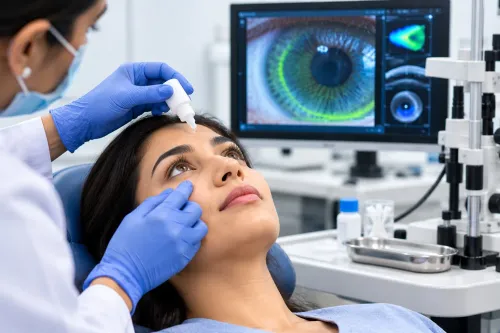
Cycloplegic drops temporarily relax the focusing muscle. They are especially useful for young children, children who cannot give consistent answers, suspected long-sightedness, unequal prescriptions, or a prescription that does not match the child’s behaviour. Without cycloplegia, active focusing can hide hyperopia and produce the wrong glasses prescription.
The drops can sting briefly and cause blurred near vision and light sensitivity for several hours. Bring sunglasses, allow extra appointment time, and ask whether the drops and refraction are included in the quoted fee.
A search for “children eye test in mumbai” or “eye examination for children near me” should distinguish screening from a full medical examination.
How can you compare clinics, plan follow-up costs, and book safely?
Compare the total care plan, not just the advertised consultation fee. Ask whether the clinic accepts your child’s age, whether a cycloplegic refraction, dilating drops, fundus examination, eye-pressure measurement, or imaging costs extra, and whether review visits are charged separately.
| Provider | Suitable for | Confirm before booking |
|---|---|---|
| Optical shop or general optometrist | Basic screening and spectacles | Referral arrangements if the child has squint, unequal prescriptions, reduced vision, cataract, glaucoma, or an abnormal red reflex |
| Ophthalmology clinic | Medical examination, diagnosis, and treatment planning | Pediatric experience, tests included, and follow-up fees |
| Surgical hospital | Surgery and postoperative care | Surgeon, hospital, anaesthesia, investigations, implants, and review charges |
Budget separately for spectacles, atropine or other medicines, patching supplies, imaging, repeat refractions, and review visits. Surgery requires a written estimate covering every hospital and postoperative charge. For example, when comparing Clarity Eye Clinic-Dr.Nikita Mashru with another provider, request both clinics’ itemised estimates rather than comparing consultation fees alone.
Insurance often excludes outpatient consultations and refraction. Ask your insurer whether medically necessary surgery is covered, whether the facility is in-network, and whether exclusions, waiting periods, or pre-authorisation apply before scheduling.
- A white or red pupil in photographs
- A newly crossed or wandering eye
- Severe pain, sudden vision loss, trauma, or a swollen red eye
- Persistent head tilt, light sensitivity, or unexplained visual behaviour
Book prompt medical assessment for these signs.
Related service
PEDIATRIC EYE CARE (Age 5+) Pediatric Eye Care (Age 5+) by Dr. Nikita Mashru Pediatric Eye Care at Clarity Eye Clinic, Lower Parel focuses on the early detection, diagnosis, and... View service → |
Frequently asked questions
What should you budget for a child eye examination in Lower Parel?
Budget ₹800–₹2,500 for a private pediatric ophthalmology consultation with a basic examination. A visit including dilating drops and cycloplegic refraction commonly costs ₹1,500–₹4,000. Premium hospitals and senior specialists may charge more.
What does a quoted pediatric eye consultation fee include?
Ask whether the fee includes visual-acuity testing, eye alignment checks, refraction, dilating drops, cycloplegic refraction, a written report, and follow-up advice. Clinics may charge separately for drops, tests, imaging, or spectacles.
Does my child need screening or a complete pediatric eye examination?
Screening suits children without symptoms who need a basic vision check. Choose a complete examination when your child has squinting, headaches, poor school performance, eye rubbing, abnormal screening results, unequal vision, or a family history of eye disease.
When are cycloplegic drops needed during a child eye examination?
Cycloplegic drops temporarily relax focusing muscles so the clinician can measure the prescription accurately. They are especially important for young children, suspected farsightedness, unequal prescriptions, squint, or inconsistent vision-test results.
How can I compare clinics and plan follow-up costs?
Confirm the doctor’s pediatric ophthalmology experience, included tests, dilation charges, report fees, follow-up window, and spectacle-prescription policy before booking. Ask for the total expected cost and instructions about temporary blurred near vision after drops.
Keywords