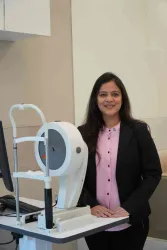

The right treatment depends on whether your eyes lack tears, lose them through evaporation, or have an eyelid, gland, allergy, lens or medication-related problem. By comparing the examination, treatment burden, expected timeline and warning signs, you can ask better questions before choosing a provider.
Key takeaways
- Identify low tear production, evaporation, or both before choosing treatment.
- Ask what each examination test reveals about your dry eye pattern.
- Compare drops, gels, ointments and prescriptions by daily treatment burden.
- Confirm improvement timelines, follow-up needs and signs requiring urgent review.
Start with the pattern, not the eye-drop brand
Treatment choice should follow the documented pattern: low tear production, excessive evaporation, or both. Dry eye assessment before treatment matters because burning and grittiness do not identify the cause; identical symptoms can come from aqueous deficiency, meibomian-gland dysfunction, allergy or eyelid exposure.
A useful review covers medicines such as antihistamines, antidepressants and isotretinoin, autoimmune disease, contact-lens wear, screen-related reduced blinking, fans, air-conditioning and dusty air. It also checks blepharitis, capped gland openings, thick meibomian secretions, incomplete blinking, eyelid malposition and allergy. Do not stop a prescribed medicine without the prescriber’s advice.
| Subtype | Findings that support it | Treatment direction |
|---|---|---|
| Aqueous-deficient | Low tear volume, including an abnormal Schirmer result; systemic disease or medication history | Tear replacement and treatment of inflammation or the underlying condition |
| Evaporative | Short tear-break-up time, rapid evaporation, blepharitis or meibomian-gland dysfunction | Warm compresses, lid-margin care, blink and airflow changes, plus gland treatment when needed |
| Mixed | Low volume combined with rapid evaporation or gland disease | Address both tear production and eyelid-gland problems |
Contact lenses can worsen dryness and blur the symptom pattern, so wear duration, lens material and care routine belong in the assessment. Pain, marked redness or reduced vision while wearing lenses needs prompt examination.
Dry eye treatment for options compared in lower parel should therefore be a decision based on the documented subtype, trigger pattern and examination findings—not a clinic label or eye-drop brand.
What the examination tests—and what each test tells you
A useful work-up matches symptoms with the mechanism, not just a dry-eye label. You answer a questionnaire, then undergo only the tests needed to clarify tear quality, tear quantity, surface damage and eyelid-gland disease.
| Test | What you experience | What it tells the clinician |
|---|---|---|
| Symptom scoring | Answer questions about burning, grittiness, fluctuating vision and daily impact | Measures severity and tracks change; symptoms alone cannot identify the cause |
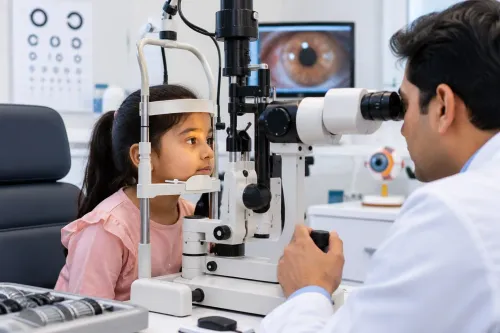
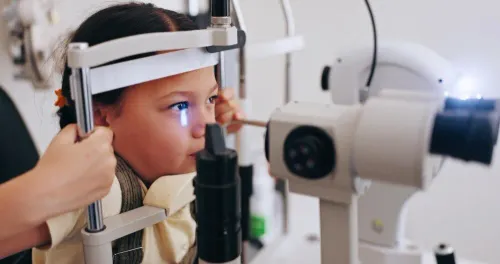
| Slit-lamp examination | Chin and forehead rest while a bright microscope examines the eye | Shows redness, blepharitis, corneal disease, eyelid abnormalities and tear-film quality |
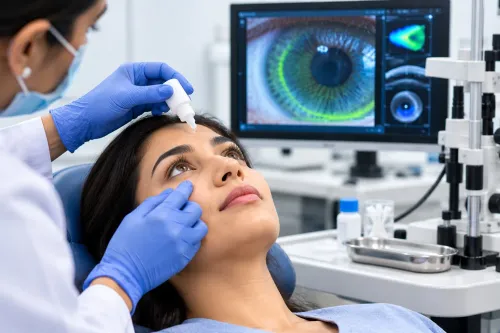
| Fluorescein staining | A yellow-orange drop or strip touches the eye; blue light reveals marked areas | Maps ocular-surface injury; staining supports closer treatment and corneal monitoring |
| Tear-break-up time | Fluorescein is observed after a blink while you keep your eyes open | Early film breakup or rapid evaporation points toward evaporative or mixed dry eye |
| Schirmer test | Thin paper strips sit under the lower eyelids for about five minutes | Estimates aqueous tear production; a low result supports tear deficiency |
| Tear-volume assessment | Noncontact imaging or observation of the lower tear meniscus | Adds a tear-reservoir estimate without relying on one strip test |
| Meibomian-gland evaluation | The lid margins are inspected and glands may be gently pressed | Capped openings or thick secretions support gland dysfunction and eyelid treatment |
Every test is not ordered at every visit: a clear prior result, treatment response or stable symptoms can make repetition unnecessary. Rapid evaporation, staining or low volume changes the plan; so do blocked glands, which artificial tears alone cannot fix.
When comparing dry eye treatment choices in Lower Parel, ask whether the recommendation follows documented findings, and which result justifies each drop, compress, plug or procedure.
Compare drops, gels, ointments and prescription treatment by daily burden
Compare the option’s daily burden, not just its strength. The active ingredient, preservative exposure, viscosity and bottle hygiene affect comfort, safety and adherence.
| Option | Practical trade-off | Contact lenses, dosing and vision |
|---|---|---|
| Preservative-free artificial tears | Usually hyaluronic acid or carboxymethylcellulose; suitable for frequent use, with single-use vial waste or multidose bottle handling | Remove lenses unless the label permits use; use as needed; brief blur is uncommon |
| Preserved multidose drops | Same lubricant types with preservatives such as benzalkonium chloride; convenient and less wasteful for occasional use | Remove lenses unless approved; avoid frequent dosing; minimal blur, but irritation can build |
| Gel drops | Thicker carbomer or hydroxypropyl methylcellulose; lasts longer but demands cleaner bottle handling | Usually remove lenses; use once to several times daily; temporary blur is common |
| Ointment | Petrolatum or mineral-oil base; longest surface contact, usually for bedtime | Remove lenses; use at night; greasy blur makes daytime use impractical |
Warm compresses and gentle lid-margin cleaning target meibomian-gland dysfunction; excessive heat or forceful expression can burn or inflame. Reduce fan, air-conditioner and smoke exposure, take blink breaks, and use wraparound protection outdoors. In-office gland expression or thermal treatment addresses blocked, thick secretions when home care fails; tears alone do not.
Cyclosporine or lifitegrast can reduce persistent inflammation, while tear-stimulating medicines suit selected aqueous-deficient cases. They require regular use and review. Avoid punctal plugs while inflammation is active because retaining inflammatory tears can worsen symptoms. For dry eye treatment details in mumbai, ask how the documented subtype supports each prescription or procedure.
Set expectations for improvement, follow-up and urgent review
1. Lubricating drops can ease burning within minutes, but quick comfort does not prove the cause is controlled. Use them as directed for several days; if relief is brief, increase frequency only as advised, or change preservative-free formulation, gel, ointment or a combination. Stop self-treating when symptoms persist, worsen or repeatedly return.
2. Warm compresses, eyelid cleaning and blink or airflow changes need consistent use for several weeks before judging their effect. Cyclosporine or lifitegrast also require reassessment over the following weeks rather than after a few doses; a steroid drop belongs under ophthalmic supervision.
Ongoing care takes effort in Mumbai’s heat, dust, traffic, fans, air-conditioning and screen-heavy days: avoid direct airflow, take blink breaks and use wraparound protection outdoors.
3. Remove contact lenses during significant pain, redness or reduced vision and arrange an examination. Your clinician may reduce wearing time, change lens care or recommend another design. Treat significant dry eye before cataract or refractive measurements, because surface irritation causes fluctuating vision and unreliable keratometry; measure again after control.
4. Severe or refractory disease may need serum tears or scleral lenses, which involve preparation, fitting and added cost. Seek prompt examination for marked pain, light sensitivity, reduced vision, a white corneal spot, discharge or severe one-sided redness; these signs can indicate infection or corneal injury, not routine dryness.
Questions to ask before booking a Lower Parel dry-eye consultation
Before booking, compare what the consultation will investigate, not just whether the provider uses the phrase dry eye clinic in lower parel. A thorough assessment should connect your symptoms to findings before recommending long-term drops, punctal plugs or a procedure.
- Will the clinician review your medicines, medical conditions, allergies, blinking and screen habits?
- Will they ask about contact-lens wear, lens-care products and whether you need a temporary break from lenses?
- Will they examine the eyelid margins, blink pattern and meibomian glands for capped openings, inflammation or thick secretions?
- Will they use fluorescein staining, tear-break-up time or tear-volume tests such as Schirmer testing when your history and examination indicate them?
- Will they check the cornea for staining, injury, infection or another corneal disease that artificial tears cannot manage?
- Will the clinician explain why a particular drop, plug or procedure matches your documented findings?
- What happens if pain, light sensitivity, reduced vision, discharge or severe one-sided redness appears?
Compare providers on the practical points below:
| Comparison point | Ask before booking | Why it matters |
|---|---|---|
| Assessment access | Which tests and examinations are available during the consultation? | Missing eyelid, tear-film or corneal findings can lead to a poor treatment match. |
| Follow-up | When will treatment be reviewed, and what changes are included? | Anti-inflammatory drops and gland care need reassessment. |
| Escalation | What happens if lubrication fails? | Severe disease may require serum tears, scleral lenses or corneal review. |
| Convenience | Location, appointment timing and review frequency? | Ongoing lid care and prescribed treatment require realistic follow-up. |
Clarity Eye Clinic-Dr.Nikita Mashru is one Lower Parel option to compare using these questions, not a reason to skip checking assessment quality, follow-up and treatment fit.
Related services
DRY EYES TREATMENT Dry Eye Treatment by Dr. Nikita Mashru Dry Eye Treatment at Clarity Eye Clinic, Lodha Signet, Lower Parel, Mumbai, focuses on identifying the... View service → |
CORNEA CARE by Dr. Nikita Mashru Cornea Care at Clarity Eye Clinic, Lodha Signet, Lower Parel, Mumbai, focuses on the diagnosis, evaluation, and management of... View service → |
Frequently asked questions
Why should dry eye treatment follow an assessment of the cause?
Burning and grittiness can result from low tear production, excessive evaporation, meibomian-gland dysfunction, allergy or eyelid exposure. The treatment choice depends on the documented pattern.
What does a dry eye examination test?
The examination identifies whether tears are insufficient, evaporate too quickly, or both, while checking findings linked to meibomian-gland dysfunction, allergy and eyelid exposure.
How do drops, gels, ointments and prescription treatments differ?
They differ in texture, duration of relief and daily burden. Drops are easier to use during the day, while gels and ointments can feel heavier and affect vision; prescription treatment depends on the examination findings.
What should you expect after starting dry eye treatment?
Ask when improvement should be assessed, how often follow-up is needed and which symptoms require urgent review before booking a Lower Parel consultation.
Keywords