Glaucoma treatment is meant for people with confirmed optic-nerve damage or visual-field loss, while others may need screening, risk assessment, or observation instead. You will learn which risk factors and warning signs warrant an evaluation, how glaucoma types change the treatment decision, and what to check before choosing ongoing care.
Key takeaways
- Glaucomatous optic-nerve damage or progression usually requires treatment.
- Book evaluation for raised eye pressure, family history, diabetes, or suspicious optic nerves.
- Seek urgent care for severe eye pain, halos, nausea, or sudden vision loss.
- Treatment may include eye drops, laser procedures, or glaucoma surgery.
Who Actually Needs Glaucoma Treatment Rather Than Screening?
Treatment is usually needed when testing shows glaucomatous optic-nerve damage, a matching visual-field defect, or documented progression. A confirmed diagnosis usually requires a treatment plan; screening alone does not.
| Category | What it means | Usual next step |
|---|---|---|
| Confirmed glaucoma | Optic-nerve damage, matching field loss, or progression | Discuss pressure-lowering treatment and follow-up |
| Glaucoma suspect | Findings look concerning but do not confirm damage | Repeat testing, imaging, and observation |
| Ocular hypertension | Raised eye pressure with a healthy nerve and normal field | Assess risk and monitor; treat only when risk justifies it |
| Screening | Testing someone without known glaucoma to find early disease | Schedule evaluation at an interval based on risk |
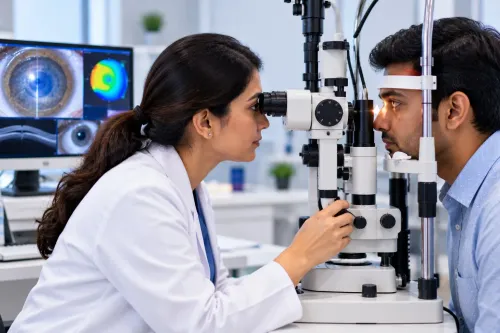
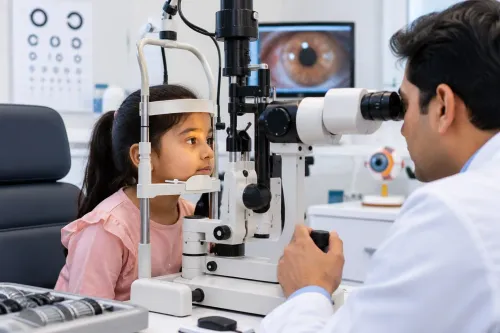
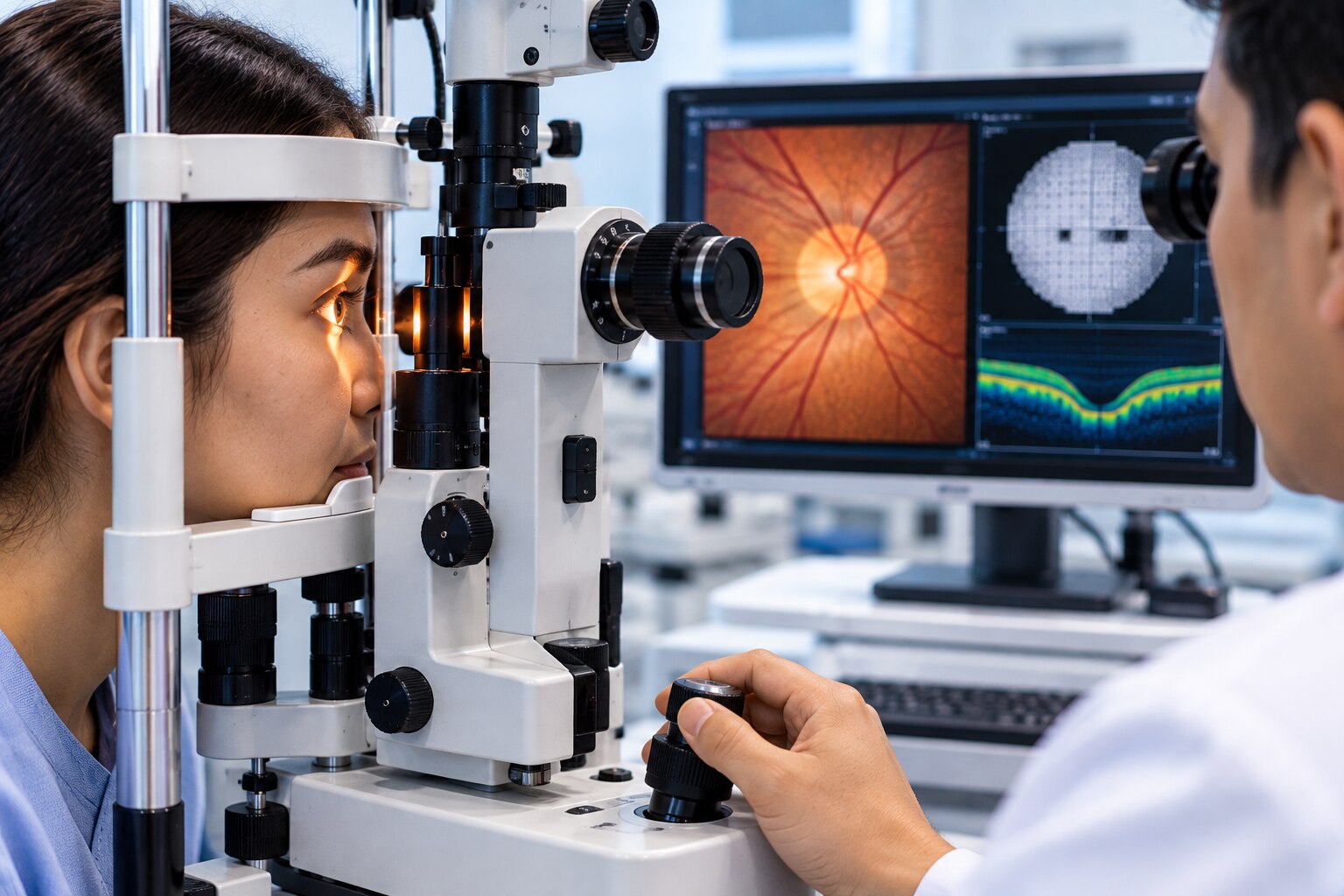
One pressure reading cannot decide who needs glaucoma treatment in Lower Parel. Glaucoma can progress with pressure in the usual reference range, as in normal-tension glaucoma, while a higher reading does not prove nerve damage. Assessment should include pressure measurement, optic-nerve examination, gonioscopy, reliable visual-field testing, and optic-nerve or retinal-nerve-fibre-layer imaging.
Lost visual-field areas cannot be restored. Glaucoma treatment in Lower Parel aims to protect the sight that remains by slowing further damage. Risk factors without abnormal findings—such as age, family history, diabetes, high myopia, steroid use, or previous eye injury—usually call for screening at an appropriate interval, not automatic treatment.
Which People Should Book a Glaucoma Evaluation, and Which Symptoms Are Urgent?
Adults over 40 should arrange a glaucoma evaluation even when vision seems normal. Risk also rises with a close relative who has glaucoma, diabetes, high myopia, previous eye injury or eye surgery, long-term steroid use, and certain ethnic backgrounds.
These factors do not prove glaucoma, but they justify assessment because open-angle disease can damage peripheral vision silently.
Arrange an eye evaluation if you belong to any of these groups:
- Adults over 40, especially as age increases
- People with a parent, sibling, or child who has glaucoma
- People with diabetes or high myopia
- People with previous eye trauma or eye surgery
- People using steroid tablets, inhalers, creams, injections, or eye drops for a long period
The testing interval depends on your eye examination, pressure, optic-nerve appearance, visual field, family history, ethnicity, and overall risk. A clinician may recommend periodic observation rather than immediate glaucoma symptoms treatment when no damage is present.
| Pattern | Typical features | What to do |
|---|---|---|
| Open-angle glaucoma | Gradual, painless peripheral-vision loss or no noticeable symptoms | Book an evaluation; do not wait for pain |
| Possible acute angle-closure | Sudden severe eye pain, red eye, blurred vision, halos around lights, headache, nausea, or vomiting | Seek same-day emergency ophthalmic assessment |
| Non-specific symptoms | Eye strain, ordinary headaches, or intermittent blurred vision | Arrange an examination, but do not assume glaucoma |
Sudden symptoms can indicate acute angle-closure glaucoma, so do not make a routine search for glaucoma care near me your first step. Go to emergency ophthalmic care instead. Eye strain, ordinary headaches, and intermittent blur do not confirm glaucoma.
How Glaucoma Type and Test Findings Change the Treatment Decision
Open-angle glaucoma often has no noticeable symptoms, so treatment decisions depend on measurable damage rather than discomfort.
| Type | What changes the decision |
|---|---|
| Open-angle | Gonioscopy confirms the drainage angle is open; optic-nerve damage, a matching visual-field defect, or progression supports treatment. |
| Angle-closure | Sudden closure requires urgent pressure lowering and reopening of the angle before routine long-term planning. |
| Normal-tension | Progression can occur within the usual pressure range; suspicious optic-nerve or visual-field changes still matter. |
| Secondary | Steroids, injury, inflammation, or previous surgery can cause it, so treating the underlying cause is part of the plan. |
| Childhood | Enlarged eyes, light sensitivity, watering, or an abnormal-looking cornea require specialist assessment for a different disease pattern. |
The work-up should include gonioscopy, optic-nerve examination, reliable visual-field testing, pressure measurements, and retinal-nerve-fibre-layer or optic-nerve imaging. A single normal pressure reading does not rule out glaucoma; repeatable results compared over time show whether damage is progressing and whether treatment is protecting vision.
Glaucoma symptoms treatment is usually preventive, because lost visual field cannot generally be restored. Halos, blurred vision, eye strain, or headaches can also result from refractive error, dry eye, migraine, or other conditions, so these symptoms alone cannot confirm a need for treatment.
Ask a glaucoma doctor in Mumbai how often fields, imaging, examinations, and pressure checks should be repeated, and what change would trigger escalation. Glaucoma treatment in Lower Parel should include continuing surveillance, not only a pressure check.
What Treatment Could Be Recommended After Glaucoma Is Confirmed?
Treatment aims to lower intraocular pressure enough to slow further optic-nerve damage. Your target pressure is individual: existing damage, age, life expectancy, starting pressure, and the rate of progression all matter. No single pressure is safe for every patient.
| Option | Typical role | Main trade-off |
|---|---|---|
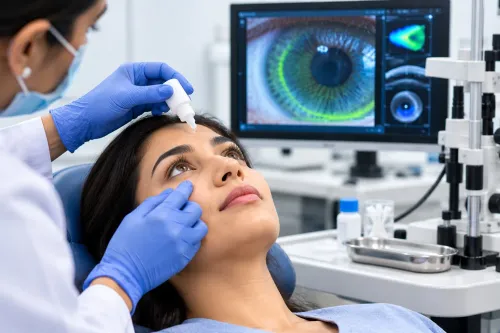
| Prescription eye drops | Common first treatment for established open-angle glaucoma | Daily dosing, side effects, and technique errors |
| Laser trabeculoplasty | Initial option for selected open-angle glaucoma | Requires suitable angle anatomy and may not control pressure permanently |
| Trabeculectomy or drainage device | Considered when pressure remains above target or damage progresses | Intensive follow-up and surgical risks |
The choice depends on disease severity, angle anatomy, likely adherence, access, cost, side effects, and your preference. These factors matter when comparing glaucoma treatment in Lower Parel, just as they do anywhere else.
Before adding medicines, your clinician should check whether apparent treatment failure reflects:
- Missed doses
- Drops placed on the eyelid instead of into the eye
- Failure to close the eyelids or press the inner corner after instillation
- Problems obtaining repeat refills
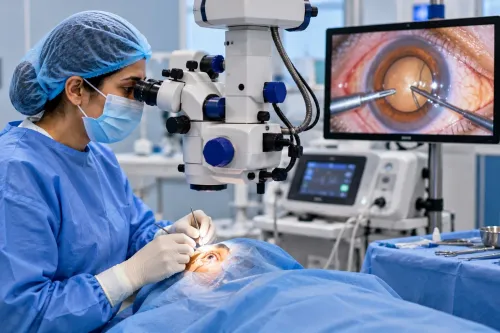
If pressure still exceeds target, or testing shows progression despite drops or laser, surgery may be appropriate. Trabeculectomy and glaucoma-drainage devices can cause pressure that is too low, infection, bleeding, cataract progression, or later failure. Surgery does not restore a lost visual field, and glaucoma symptoms treatment cannot bring back damaged optic-nerve function.
How to Choose Ongoing Glaucoma Care in Lower Parel
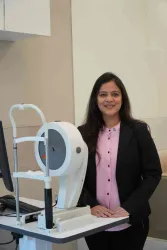
Choose a glaucoma doctor in Mumbai who can provide repeatable testing and a follow-up plan, not just a pressure reading. Clarity Eye Clinic-Dr.Nikita Mashru can be considered alongside other services by applying the same clinical and follow-up checklist.
Ask the service:
- Can it perform or arrange gonioscopy, pressure measurement, reliable visual-field testing, and optic-nerve or retinal-nerve-fibre-layer imaging?
- How often will each test be repeated, and how will results be compared with earlier examinations?
- What amount of pressure rise, visual-field loss, optic-nerve change, or imaging change would trigger more treatment?
- How will prescriptions be renewed, and who should you contact if drops cause redness, pain, allergy, blurred vision, or difficulty using them?
- Will the clinician check missed doses, drop technique, refill access, and pressure fluctuation before adding medicines?
| Plan type | What adequate care includes | Escalation |
|---|---|---|
| Confirmed glaucoma | Target pressure, treatment, serial fields, imaging, and optic-nerve reviews | Change or progression prompts treatment adjustment |
| High-risk suspect | Risk assessment, gonioscopy, repeat testing, and scheduled observation | New damage or meaningful change prompts treatment |
| Angle-closure concern | Clear instructions for urgent ophthalmic assessment | Sudden pain, red eye, halos, nausea, or vomiting needs same-day escalation |
| Long-term care | Documented comparisons across visits and renewal arrangements | Missed follow-up or worsening results requires review |
A single reassuring visit cannot establish control, and no service should promise a permanent cure. For glaucoma treatment in Lower Parel, choose continuing surveillance over convenience alone.
Related service
GLAUCOMA TREATMENT Glaucoma Care by Dr. Nikita Mashru Glaucoma Care at Clarity Eye Clinic, Lodha Signet, Lower Parel, Mumbai, focuses on the early detection, diagnosis,... View service → |
Frequently asked questions
Who needs glaucoma treatment rather than screening?
Treatment is usually needed when testing confirms glaucomatous optic-nerve damage, a matching visual-field defect, or documented progression. Screening alone does not establish a need for treatment.
Which glaucoma symptoms require urgent evaluation?
Severe eye pain, sudden vision loss, coloured halos around lights, nausea, vomiting, or a red eye can signal an urgent glaucoma problem. Seek immediate ophthalmic care when these symptoms appear.
How do glaucoma test findings affect treatment decisions?
The glaucoma type, eye-pressure measurements, optic-nerve appearance, optical coherence tomography results, visual-field findings, and evidence of progression guide the treatment plan.
What treatments can follow a confirmed glaucoma diagnosis?
Treatment may include prescription eye drops, laser procedures, or glaucoma surgery. Your ophthalmologist selects the option based on glaucoma type, pressure control, nerve damage, progression, and response to treatment.
Keywords