A dry-eye visit is more than a vision check or a request for lubricating drops. You will learn what to bring, which parts of the examination identify the underlying cause, how treatment choices differ, and what follow-up requires from you.
Key takeaways
- Expect a symptom history, eye examination and tear-film assessment.
- Tests can distinguish tear shortage, rapid evaporation and eyelid-gland problems.
- Treatment may include warm compresses, eyelid care and prescription medicine.
- Seek specialist care for persistent pain, light sensitivity or vision changes.
What happens during a dry-eye consultation?
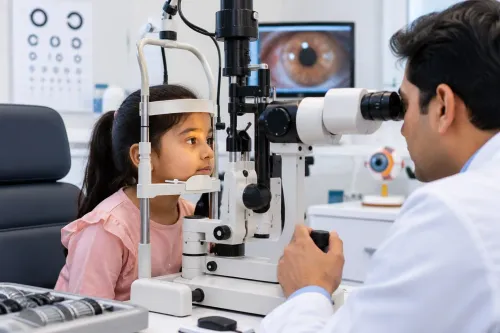
A dry eye consultation in Lower Parel starts with a symptom history, not a routine vision check. The clinician asks when dryness began, whether it fluctuates, and whether burning, grittiness, light sensitivity or blurred vision is worse in the morning or evening.
You may be asked about:
- Daily screen time, incomplete blinking and symptoms during reading or computer work
- Contact-lens wear, previous eye surgery and use of eye drops
- Medicines such as antihistamines, acne treatments or antidepressants
- Diabetes, thyroid disease, autoimmune symptoms and other health conditions
- Fan, air-conditioner, smoke and dust exposure
The examination checks how your eyelids close and how often you blink. The clinician examines the lashes and lid margins for blepharitis, inspects the meibomian-gland openings, and looks for blocked or poor-quality oil secretion.
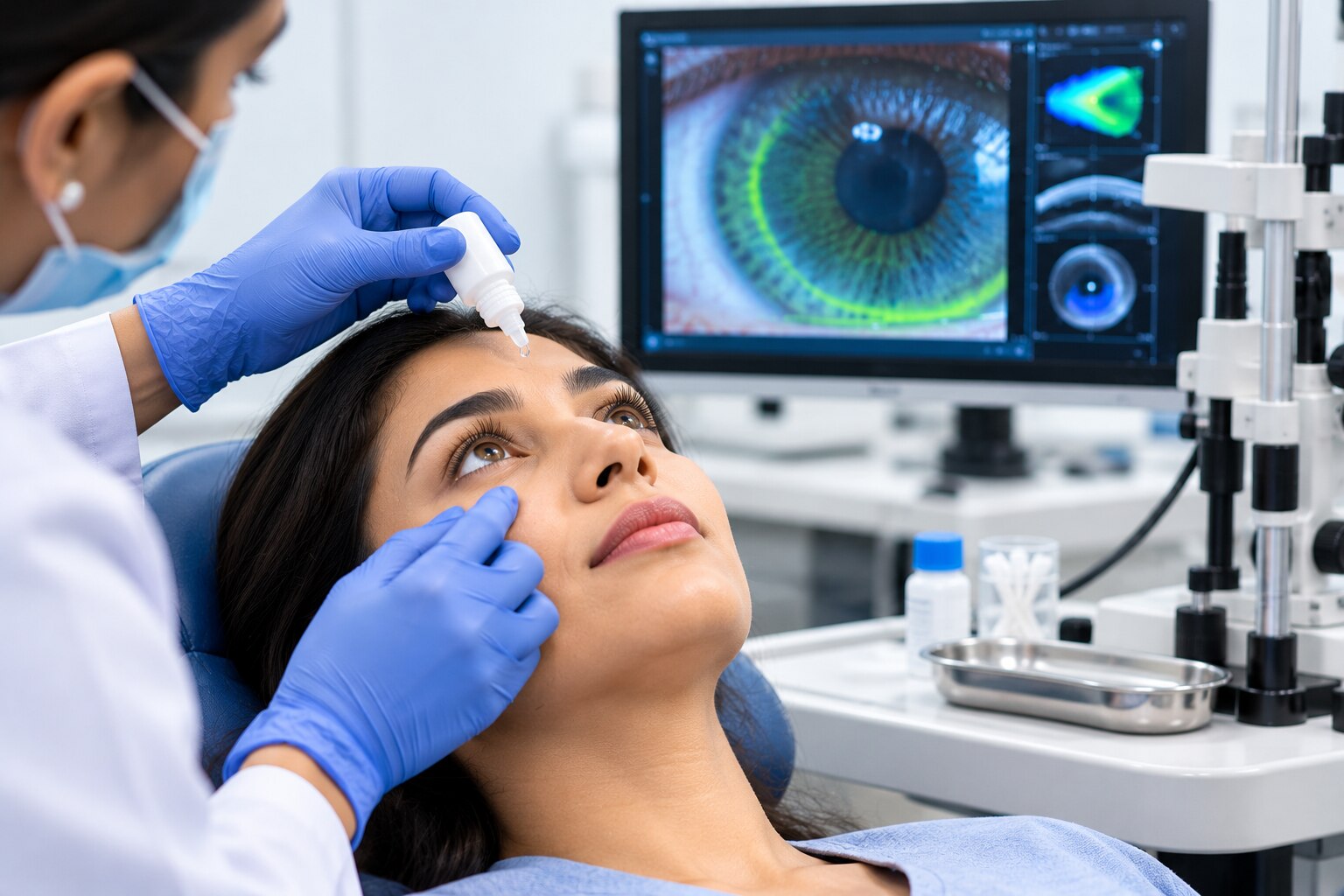
The tear film is assessed for stability and volume. Tear-film breakup time measures how quickly the tear layer develops dry spots after a blink; tear-meniscus assessment estimates the tear pool. Fluorescein or lissamine-green staining reveals damage on the cornea and conjunctiva, while the corneal examination checks surface irregularity and other causes of blurred vision.
Schirmer testing, tear osmolarity or gland expression may be added when the findings are unclear. These results help identify whether evaporation, low tear production, inflammation or a mixed problem dominates, so dry eye treatment in Lower Parel is matched to your findings rather than sold as one fixed package.
Which tests identify the cause of dryness?
Tear-break-up time, Schirmer testing, surface staining and eyelid examination show whether dryness comes from too few tears, rapid evaporation, surface damage or poor lid function. A clinician also reviews medicines, contact-lens use, autoimmune symptoms, screen hours and whether symptoms worsen in the morning or evening.
| Mechanism | Tests and clues | What it indicates |
|---|---|---|
| Aqueous deficiency | Schirmer strip, low tear meniscus, corneal or conjunctival staining | Inadequate tear production |
| Evaporation or MGD | Short tear-break-up time with a normal Schirmer result; blocked glands, thick secretions or reduced gland expression | Tears evaporate because the oily meibomian layer is inadequate |
| Inflammation | Slit-lamp examination, redness, fluorescein or lissamine-green staining and persistent burning | An inflamed ocular surface rather than simple lack of lubrication |
| Allergy | Itching, swollen conjunctiva, papillae under the eyelids and seasonal or exposure-related symptoms | Allergic eye disease contributing to irritation and rubbing |
| Exposure | Incomplete eyelid closure, lagophthalmos, exposed lower cornea and staining that worsens after sleep | Tears are lost because the surface is not fully covered |
| Medication effect | A medicine review alongside tear testing and surface examination | Dryness linked to antihistamines, antidepressants, acne medicines or other drugs |
| Screen-related strain | Blink assessment, fluctuating vision and symptoms after concentrated near work, with otherwise stable tests | Reduced blinking and prolonged visual fixation |
A dry eye specialist in Mumbai may combine these findings rather than rely on one abnormal result. The corneal examination also checks whether staining reflects dry-eye damage, contact-lens irritation or another condition requiring different care.
What treatments can be included beyond eye drops?
Treatment is matched to the dominant problem rather than added as a fixed package. Aqueous deficiency needs tear replacement; evaporation needs eyelid and meibomian-gland care; inflammation needs targeted medication. Mixed disease needs more than one approach.
- Tear-film support: Use preservative-free artificial tears when drops are needed frequently. Gel drops or ointment last longer but blur vision, so reserve them for bedtime unless your clinician advises otherwise.
- Eyelid care: Apply a comfortably warm, not hot, compress for several minutes, then clean the lash margins gently. Do not scrub, use household products, or squeeze the eyelids.
- Meibomian-gland treatment: A clinician may express blocked glands or recommend in-clinic thermal treatment. Do not force gland expression at home; it can injure the lid or worsen inflammation.
- Inflammation control: Prescription anti-inflammatory drops, including corticosteroids or longer-term medicines, require ophthalmic supervision. Do not start steroid drops without an examination.
- Tear drainage: Punctal plugs slow tear drainage when inadequate tears are the main problem. They are unsuitable when untreated lid or ocular-surface inflammation is driving symptoms.
Severe or persistent disease can require autologous serum tears, scleral lenses, or an amniotic membrane rather than routine lubrication. Anyone seeking ocular surface treatment in Mumbai should discuss contact-lens use, allergies, medicines, and planned eye surgery before choosing these options.
Stop contact lenses and seek urgent assessment for severe pain, sudden vision loss, marked redness, or suspected infection.
How long does treatment take, and what must you do at home?
Expect improvement over weeks rather than after one appointment. Lubricating drops can ease discomfort quickly, but inflammation and meibomian-gland dysfunction often need several weeks of consistent treatment before symptoms and tear-film stability improve.
Book a dry eye consultation in Lower Parel with enough time for history, examination and an initial plan. Bring every eye drop and medicine you use, note when symptoms are worst, and follow instructions about contact-lens removal before testing.
If cataract or refractive surgery is planned, allow time to stabilise the ocular surface before measurements; untreated dryness can make those measurements less reliable.
Your daily routine may include:
- Use preservative-free artificial tears at the prescribed frequency, rather than waiting until your eyes hurt.
- Apply a warm compress for the advised duration, then clean the eyelid margins gently.
- Take screen breaks, blink fully, and keep fans or air-conditioning from blowing directly at your eyes.
- Wear glasses instead of contact lenses when lenses increase burning or fluctuating vision.
- Use prescription anti-inflammatory drops exactly as directed; do not extend steroid drops without review.
Arrange follow-up when instructed, commonly after several weeks, so the clinician can reassess staining, tear stability, eyelids and symptoms. Return sooner for worsening pain, marked redness, light sensitivity or reduced vision. Treatment can then be continued, adjusted or escalated rather than repeated blindly.
When do you need specialist ocular-surface care?
Choose an ophthalmologist with cornea or ocular-surface experience when symptoms persist despite lubricants, or when you have marked light sensitivity, recurrent corneal erosion, contact-lens intolerance, previous eye surgery, or autoimmune disease. These features can signal corneal damage, inflammation, or a tear-film problem that routine drops will not correct.
| Routine care may be appropriate | Specialist escalation deserves discussion |
|---|---|
| Symptoms improve with the prescribed tear and eyelid routine | Symptoms continue despite consistent treatment |
| Mild irritation without corneal staining or vision change | Recurrent erosion, significant staining, or marked light sensitivity |
| No contact-lens, autoimmune, surgical, or medication complication | Contact-lens intolerance, autoimmune disease, or previous eye surgery |
| No planned elective eye surgery | Cataract or refractive surgery is being considered |
A clinic assessing dry eye treatment in Lower Parel should match escalation to examination findings, not sell every device or procedure. Thermal gland treatment, intense pulsed light, and gland expression suit selected meibomian-gland cases; autologous serum tears, scleral lenses, or amniotic membrane treatment are reserved for severe or refractory disease.
Severe pain, sudden vision loss, pronounced redness, or suspected corneal infection needs urgent assessment, not a routine appointment. Clarity Eye Clinic-Dr.Nikita Mashru can help determine whether routine management is sufficient or whether cornea-led ocular surface treatment in Mumbai is appropriate, including prescription anti-inflammatory treatment or pre-surgery surface optimisation.
A dry eye specialist in Mumbai should also explain the risks of unsupervised steroid use, including raised eye pressure, cataract, and infection.
Related services
DRY EYES TREATMENT Dry Eye Treatment by Dr. Nikita Mashru Dry Eye Treatment at Clarity Eye Clinic, Lodha Signet, Lower Parel, Mumbai, focuses on identifying the... View service → |
CORNEA CARE by Dr. Nikita Mashru Cornea Care at Clarity Eye Clinic, Lodha Signet, Lower Parel, Mumbai, focuses on the diagnosis, evaluation, and management of... View service → |
Frequently asked questions
What happens during a dry-eye consultation in Lower Parel?
The clinician reviews when symptoms began, what worsens them, and whether burning, grittiness, light sensitivity or blurred vision occurs. The examination then assesses the tear film, eyelids and eye surface.
Which tests identify the cause of dry eye?
The clinician may assess tear quantity, tear-break-up time, corneal staining, eyelid glands and the quality of the tear film. These findings help separate aqueous-deficient dry eye from evaporative dry eye and eyelid-gland dysfunction.
What can dry-eye treatment include beyond eye drops?
Treatment can include warm compresses, eyelid cleaning, management of eyelid-gland dysfunction, prescription medicines and changes that reduce screen-related evaporation. The choice depends on the examination findings.
How long does dry-eye treatment take?
Some symptoms improve after consistent home care, but tear-film and eyelid-gland problems often need follow-up over several weeks. Use treatments as directed and attend review appointments if symptoms persist.
When do you need specialist ocular-surface care?
Arrange specialist assessment for persistent symptoms, significant pain, light sensitivity, recurring redness, contact-lens intolerance or blurred vision that does not settle. These signs can require treatment beyond routine lubricating drops.
Keywords