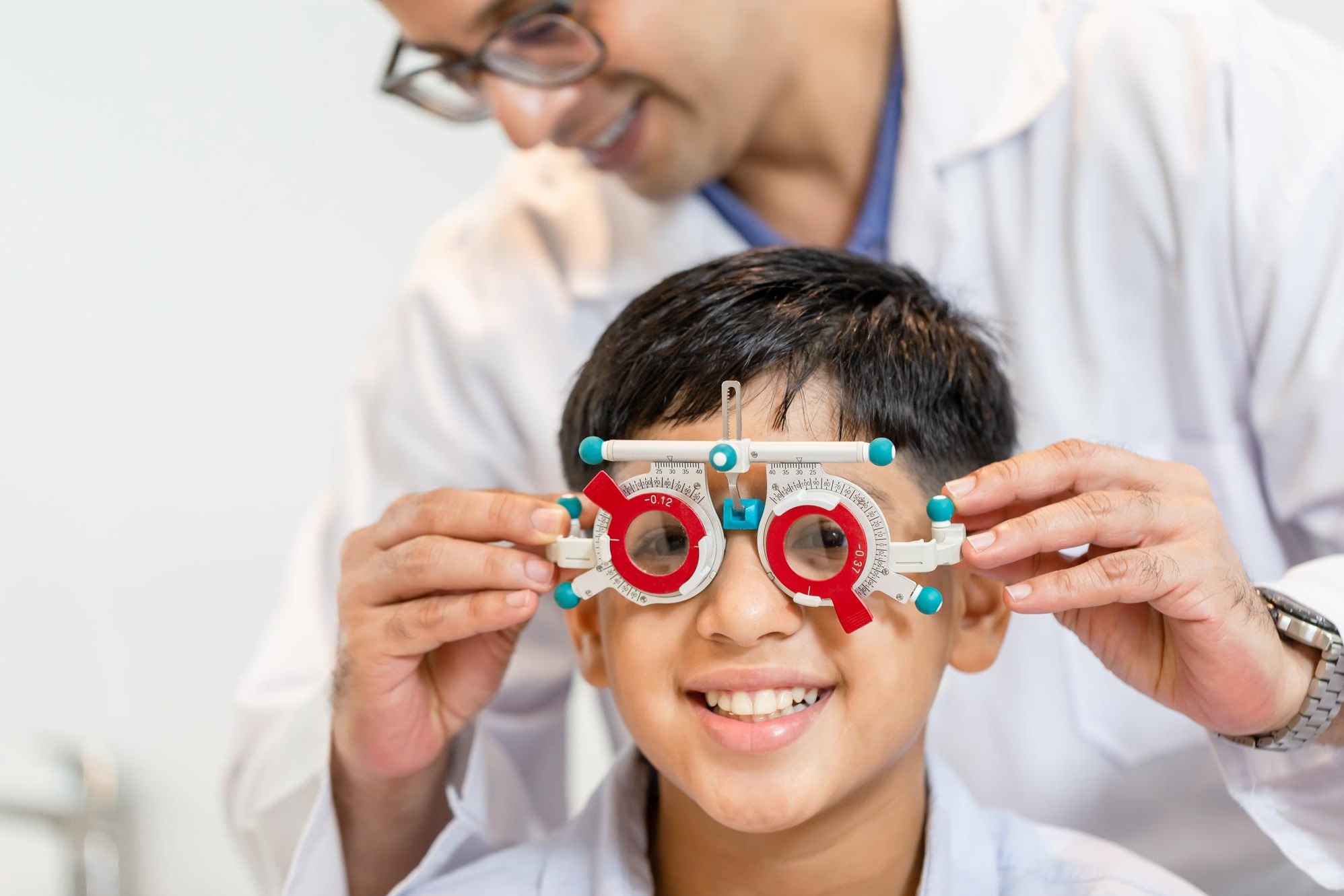
Parents often arrange an eye examination after a child reports blurred vision, but children do not always complain. Sometimes the first clues appear through school performance, reading behaviour, eye alignment, headaches, or the way a child positions objects while looking at them.
Families seeking pediatric eye care in Dadar, Mumbai, can use a simple checklist to decide when a comprehensive assessment may be appropriate.
Watch How Your Child Uses Their Eyes
Consider an eye examination if you repeatedly notice:
- Squinting to see distant objects
- Sitting very close to screens
- Holding reading material unusually near
- Covering one eye while reading
- Tilting the head to look at objects
- One eye drifting inward or outward
- Frequent eye rubbing
- Repeated headaches associated with visual work
- Difficulty copying information from a classroom board
- Complaints that words or objects look blurred
A single episode may not indicate a significant problem. Persistent or recurring behaviour deserves more attention.
Check Whether There Is a Family Eye History
Tell the ophthalmologist about relevant family history, particularly childhood spectacle use, squint or strabismus, amblyopia, and significant inherited eye conditions.
Family history does not mean a child will develop the same condition, but it can provide useful clinical context.
Prepare for the Appointment
Before attending the examination, parents can note when symptoms occur and whether they affect distance vision, reading, screens, schoolwork, or outdoor activities.
Bring existing spectacles and previous eye prescriptions or reports if available. If a teacher has noticed a specific visual difficulty, that information can also be useful.
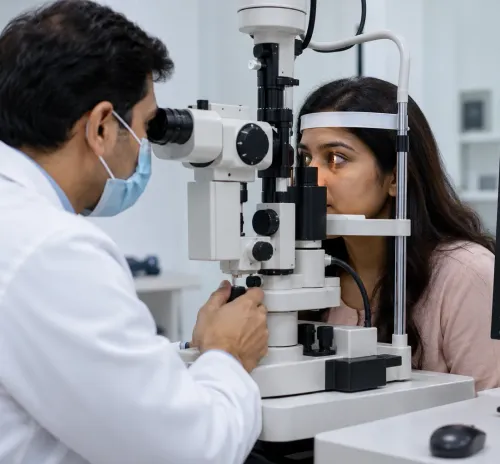
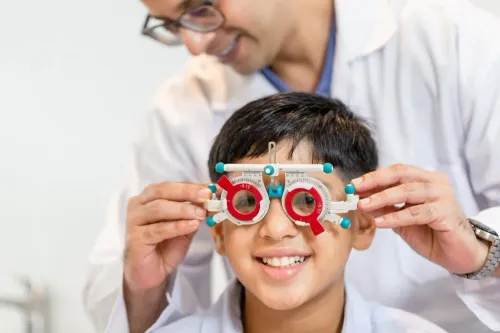
Depending on age and findings, the examination may include visual acuity testing, refraction, eye alignment assessment, eye movement evaluation, and an examination of ocular health. Eye drops may sometimes be required for accurate refractive assessment in children.
Do Not Base the Decision Only on Academic Performance
A child can perform well academically and still have an eye problem. Equally, difficulties at school can have many causes unrelated to vision.
The purpose of pediatric eye assessment is to determine whether eyesight or eye alignment is contributing to the child's difficulties rather than making assumptions from behaviour alone.
Clarity Eye Clinic offers pediatric eye evaluation for families in Dadar and nearby Mumbai areas.
Parents who notice persistent squinting, unusual viewing habits, an eye turn, recurring visual complaints, or difficulty seeing at school have reasonable grounds to arrange an assessment. Childhood eye care is particularly valuable because visual development is still taking place. Identifying refractive errors, alignment problems, or other eye conditions provides a clearer basis for deciding whether spectacles, observation, treatment, or additional evaluation is needed.
Keywords